
What Bankers Need to Know About 1031 Exchanges

bankers and 1031 exchanges

If you're a banker you are a relationship manager which means that you're always looking for ways to bring more value to the representation of your clients. Bankers know their clients’ situations and often can see opportunities that their clients don't even realize are in front of them. Here are a few things bankers need to know about 1031 exchanges in order to help their clients.

Introducing your Client to a Qualified Intermediary

One of the most important opportunities that a banker has is to make that critical introduction to a qualified intermediary when their client is about to sell a property in what could be a fully taxable transaction. If the banker has their eyes open and sees the opportunity they can save their client hundreds or thousands of dollars by showing them the benefits of a 1031 exchange. Rather than selling the property outright in a taxable transaction, since you're probably already buying another property why not use a qualified intermediary to defer those gains indefinitely.

Nothing puts a smile on your client’s face bigger and better than when a banker shows a client how to save hundreds or thousands of dollars in taxes. That is truly bringing benefit to the relationship between the banker and the client.

  • Start Your 1031 Exchange: If you have questions about what bankers need to know about 1031 exchanges, feel free to call me at 612-643-1031.

Defer the tax. Maximize your gain.


© 2016 Copyright Jeffrey R. Peterson All Rights Reserve
Reporting a 1031 Exchange with Form 8824

Filing form 8824

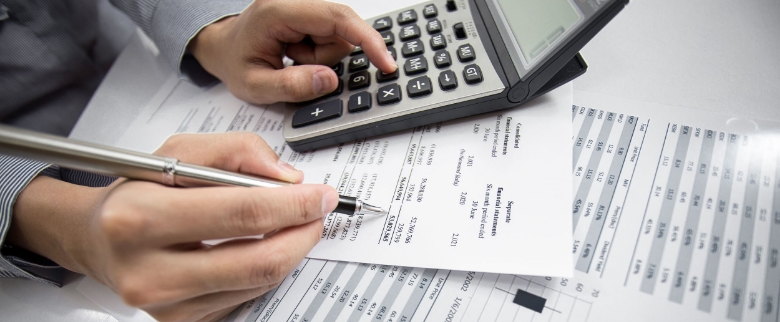
Form 8824 is a little worksheet that you attach to your tax return to report the 1031 exchange. The 8824 is sort of like the answer to the IRS’s question of "where’s my money?" Because when you sell the relinquished property, the title company, law firm, or closing agent that sells and closes that relinquished property is required to report that sale on a 1099 so the IRS is going to know that you sold your relinquished property and they’re going to be wondering where the money is.

Filing Form 8824

The form 8824 answers that question by saying we sold that relinquished property and here's the replacement property that we purchased, and it gives the IRS all the information they need to know to line up and see how the dots are connected between the sale of the relinquished property and the purchase of the new property.

Sometimes taxpayers that sell say in one year and acquire the replacement property in the subsequent year are uncertain what year they file the 8824. Is it the year from which the sale occurred or is it in the year that the purchase occurred? The answer is you need to file the 8824 for the tax return applicable to the year you sold the relinquished property. The IRS is going to receive that 1099 for the year in which you sold your relinquished property and they're going to be asking where's my money. And the answer will come from the 8824 in the year in which you sold your relinquished property.

  • Start Your 1031 Exchange: If you have questions about form 8824, feel free to call me at 612-643-1031.

Defer the tax. MAXIMIZE your gain. 

© 2016 Copyright Jeffrey R. Peterson All Rights Reserve

Non-Safe Harbor 1031 Exchanges

non-safe harbor 1031 exchange

Many people are interested in reverse 1031 exchanges but they are not interested in the 180 holding period cap. The big complaint about rev proc 2037 is that you are only allowed to park a property for up to 180 days, and you can't do much in 180 days. This is especially true if you're doing a construction reverse exchange where you want to construct an enormous amount of improvements. Here are some important things to remember about non-safe harbor 1031 exchanges.

Rev Proc 2037

It's important to note that the IRS does not necessarily say that non-safe harbor exchanges are bad, or make any judgments about them, they just say “if you want to be inside of the safe harbor, stay within the four corners of this revenue procedures.”

Why would you ever want to go outside of the safe harbor? The primary reason is if you need to park a property for longer than 180 days.

  • Start Your 1031 Exchange: If you have questions about Non-Safe Harbor Exchanges, feel free to call me at 612-643-1031.

Defer the tax. Maximize your gain.


© 2016 Copyright Jeffrey R. Peterson All Rights Reserved

The Benefits of a Build-to-Suit 1031 Exchange

Sometimes taxpayers will sell their relinquished property and want to buy a new replacement property that is built specifically to their specifications. This article will focus on the rules and regulations that govern build-to-suit 1031 exchanges.

General Build-to-Suit Rules

The general rule for build-to-suit exchanges is that you can’t construct improvements on land that the taxpayer already owns. The IRS takes the position that any improvements you construct on the land that you already own don't count for the 1031.

So in order to do a build-to-suit construction exchange, the taxpayer sells their old relinquished property and the money comes to the intermediary and is held in an escrow account. Then the intermediary forms an LLC to be the straw man purchaser that acquires title to the new property and holds title to it while the improvements or remodeling is completed.

The Benefits

The idea is that the taxpayer gets two awesome benefits:

  1. They get a property built to their specific needs and specifications.

  2. They get to defer the gains built into this property built to their specific needs.

Take this example: you sell a relinquished property for a million dollars, buy a piece of raw land for five hundred thousand, and then you make construction improvements of five hundred thousand dollars or more during the 180 day exchange period, then you get to defer every penny of tax. You have acquired or received a replacement property of equal or greater value than what you relinquished. And the beauty of a build-to-suit is you get to construct those improvements to get the requisite value up and you get to construct them to your specific values and needs.

  • Start Your Exchange: If you have questions about build to suit 1031 exchanges in Minneapolis, feel free to call me at 612-643-1031.

Defer the tax. Maximize your gain.


© 2016 Copyright Jeffrey R. Peterson All Rights Reserved

What is a Delaware Statutory Trust?

delaware statutory trust

A Delaware Statutory Trust (DST) is a new-fangled creature. Years ago, LLCs were the new kids on the block and not every state had an LLC statute. DSTs are kind of like the newest kids on the block. Here is a primer on Delaware Statutory Trusts as they relate to 1031 exchanges.

The Basics of a Delaware Statutory Trust

A Delaware Statutory Trust is a method of owning property where at the top of the ownership pyramid there is a trustee that is the figurehead owner of the property. That trustee can enter into institutional financing with creditors, and can enter into leases with occupants of the property. But for tax purposes the beneficial owners of the trust, the investors that put their money into the purchase of the DST, are not deemed to be owners of a trust, but instead are deemed to be owners of the assets (typically real property) of the trust.

DSTs and 1031 Exchanges

For 1031 exchange purposes you can sell a traditional fee interest in title and acquire a beneficial interest in a Delaware Statutory Trust and that interest will be treated as interest in the underlying real estate and as like-kind to the fee simple title sold in the relinquished property.

Some of the benefits of a Delaware Statutory Trust are that they may be designed to provide a steady income stream for the investors, typically the debt on a DST is institutional and non-recourse financing. So if a taxpayer has to acquire a property with debt on it, to satisfy any requirements under the napkin test for debt relief, at least they are taking-on non-recourse debt instead of debt for which they are personally liable for.

  • Start Your 1031 Exchange: If you have questions about Delaware Statutory Trusts, feel free to call me at 612-643-1031.

Defer the tax. Maximize your gain.


© 2016 Copyright Jeffrey R. Peterson All Rights Reserved