
1031 Exchange

A Guide for Title Closers Completing the Purchase of a 1031 Exchange Replacement Property

What do closers need to know about the replacement property closing statement and what closing costs are permitted on that statement?

Remember the Big Picture

Remember, our big picture here is that we're trying to reinvest all of the exchanger’s equity into the property. So if there's going to be a mortgage or deed of trust on the replacement property we may have to constrain the lender to tell them "don't loan this buyer more money than they actually need to make this purchase happen."

Even though the exchanger may qualify for a larger loan, we need to rein that lender in and not let them over-loan the purchase of this property such that at the bottom of the closing statement it shows cash to the buyer in the amount of x. We want that closing statement to zero-out at the bottom so that our buyer won't get any cash back at the time of closing.

Transactional Expenses

The next item to remember is that certain transactional expenses should not be paid for out of the exchange funds. In particular, any costs related to that new mortgage or deed of trust should typically be paid for by the exchanger out-of-pocket. Alternatively, the exchanger may ask the lender to give them a no-cost loan such that there are no origination fees or charges for the loan but that the exchanger pays a higher interest rate in return for the no cost loan.

Another technique that taxpayers sometimes use is to ask the seller for a concession to say “seller, will you pay up to $5,000 of my closing cost and prepaid expenses at the time of closing?” That way they're able to move some of these non-qualified transactions onto the seller side.

If there will be any reserve accounts established (for example to pay property taxes or insurance premiums), those reserves should be funded with monies other than the 1031 funds, so that all of the 1031 funds are applied exclusively for the purchase of the like-kind replacement property. A reserve account full for cash may be deemed ‘boot’ by the IRS, so oftentimes buyers will fund the reserves out-of-pocket.

  • Start Your 1031 Exchange: If you have questions about 1031 exchanges, feel free to call me at 612-643-1031.

Defer the tax. Maximize your gain.

© 2021 Copyright Jeffrey R. Peterson All Rights Reserved

Register Now for the REJournals 14th Annual Capital Markets Summit

50642531_l.jpg

This Friday, May 14, Jeff Peterson will be presenting at the REJournal 14th Annual Capital Markets Summit.

Event Details

  • When: Friday, May 14, 2021

  • Where: Golden Valley Country Club, 7001 Golden Valley RD, Golden Valley, MN 55427

  • Cost: $99 IN PERSON, $99 VIRTUAL VIEWING with CE, $39 VIRTUAL VIEWING without CE

  • This course has been approved by the Minnesota Commissioner of Commerce for 4 hours of real estate continuing education

About the Presentation

Due to the damaging effects of the pandemic, some segments of real estate, such as hotels, entertainment, retail malls, and offices are beaten down. Changing the 1031 exchange, as outlined in President Biden’s plan, would worsen the problems they’re already dealing with.

The administration's desire to invest in America’s infrastructure is great. However, a key component of infrastructure is being missed in this effort. The buildings that make up our housing stock, offices, shops, and warehouses are a part of that infrastructure. These structures need as much ongoing capital commitment to them as roads, bridges, and other parts of infrastructure. The best way to encourage improvements is to have appropriate tax polices that encourage investment in the real estate economy.

The existing 1031 exchange rules are wholly consistent with these themes. It encourages both investment and more importantly reinvestment in real estate. Therefore, it is extremely inconsistent to limit 1031 exchanges while creating other infrastructure investment incentives programs and spending.

  • Start Your 1031 Exchange: If you have questions about 1031 exchanges, feel free to call me at 612-643-1031.

Defer the tax. Maximize your gain.

© 2021 Copyright Jeffrey R. Peterson All Rights Reserved
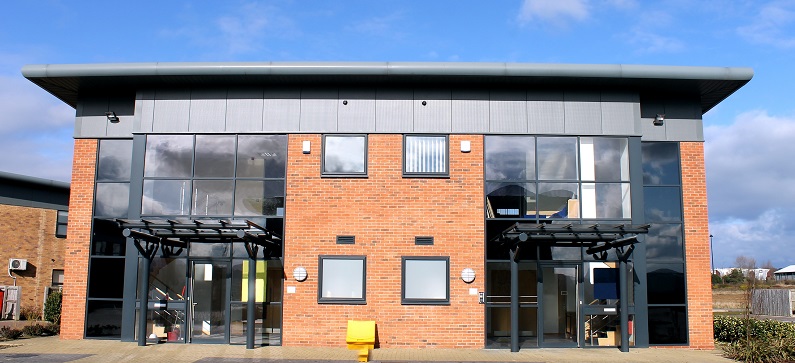
Getting Rid of 1031 Exchanges Would Negatively Impact Smaller CRE Owners

1031-Exchange-Fails.jpg

Many people assume that President Biden’s recently proposed “American Families Plan” that significantly reduces 1031 exchanges would only impact the top 1%. But the reality is that this plan would negatively impact smaller commercial real estate investors as well, by limiting their ability to roll over profits tax-free into a similar new real estate investment. The result could include a lot of unintended consequences, such as less appreciation for commercial real estate, less liquid markets and less price transparency.

“This could curb investors’ willingness to purchase new properties, lead to higher leverage on properties purchased in an effort to maximize returns or decrease investors’ desire to invest in and improve the assets they currently own,” BofA CMBS strategists Alan Todd, Mao Ding and Graham Voss wrote in their April 30 securitization note.

1031 Exchanges are Used by Investors Big & Small

1031 exchanges are used by smaller investors who buy modest properties that fly beneath the radar of larger commercial real estate firms. These like-kind exchanges allow investors to defer capital gains taxes when selling real properties by reinvesting the proceeds into new, like-kind replacement property.

“The president would also end the special real estate tax break that allows real estate investors to defer taxation when they exchange property for gains greater than $500,000,” BofA says. “An empirical analysis of exchanges reveals real property like-kind exchanges are associated with increased capital investment in the replacement property, reduced loan-to-value ratios (that reduces system-wide risk), and shorter holding periods.”

U.S. Department of Treasury Office of Tax Analysis estimated $37.56 billion in tax revenue will be foregone between 2020 and 2029 due to like-kind exchanges.

 If smaller commercial real estate investors no longer buy these assets because of the limit on 1031 exchanges, the impact could be far-reaching and negative for the greater economy.

  •  Start Your 1031 Exchange: If you have questions about 1031 exchanges, feel free to call me at 612-643-1031.

Defer the tax. Maximize your gain.

© 2021 Copyright Jeffrey R. Peterson All Rights Reserved

What to Do if Construction Isn’t Done by the 180 Day 1031 Exchange Deadline?

1031-Replacement-Property-Requirements.jpg

In a build-to-suit exchange you are racing the clock to construct like-kind improvements so that the value of the acquired land plus the value of the partially completed improvements exceed the value of your relinquished property. By the end of your 180 day exchange period, you want to have received the replacement property of equal or greater value than what you disposed of. But what if construction doesn't finish by the end of your 180 days?

Uncontrollable Variables

The problem with construction is that there a lot of variables that are outside of your control, such as:

  • Supply Issues

  • Work Issues

  • Economic Issues

  • Permitting

  • Licensing

  • Weather

All of these factors can hurt your ability to manufacture improvements within the exchange period.

Incomplete Construction

So the question arises: what if construction isn't fully finished? Or what if it isn't finished enough so that you've received a replacement property of equivalent value?

If you don't continue your investment into a property of equivalent or greater value within the hundred and eighty days, you may recognize some gains to the extent you've received a lesser valued property.

Partial Tax Deferral

But even that may still give you partial tax deferral. It's a factor of how low your basis was in the old property to determine how great your victory may be, even if it's just a partial victory.

If you're thinking about doing a build-to-suit we suggest you get planning early and have all of your contractors, permits, and plans in place perhaps even before you dispose of the relinquished property so that you can win the race against the 180 day clock.

  • Start Your 1031 Exchange: If you have questions about 1031 exchanges, feel free to call me at 612-643-1031.

Defer the tax. Maximize your gain.

© 2021 Copyright Jeffrey R. Peterson All Rights Reserved

1031 Exchanges of Rental Properties and Vacation Homes

Vacation-Home-1031.jpg

In a 1031 exchange, no gain or loss shall be recognized on the exchange of real property held for productive use in a trade or business or for investment if such real property is exchanged solely for real property of like kind which is to be held either for productive use in a trade or business or for investment. But do vacation homes and rental properties satisfy those requirements?

Consider the Intent of the Owner

The relinquished property must be held for a qualifying purpose, e.g., investment / business. It has been said that one must have had the "intention" to hold the property for investment purposes at the time of the sale; and that it is the taxpayer's responsibility to demonstrate the requisite intent (to hold the property for productive use in a trade or business or for investment) at the time of the exchange. 

In Rev Rul 57-244, 1957-1 CB 247, the IRS held that a residential property could be changed to qualified exchange property if the taxpayer actually altered or transformed the use of the property. However, simply renting out a personal residence will not automatically qualify it for tax-deferred exchange treatment.

Here is an excerpt from a tax treaties that is somewhat on point but deals more with the holding of the new replacement property:

  • The property received in the exchange must also be held for investment or in the taxpayer's trade or business. It is not clear how long such property must be held. The phrase "to be held for" in I.R.C. § 1031(a) implies a continuity of ownership. A subsequent disposition of the property received may be evidence that the property was not acquired for investment or use in the taxpayer's business.

What if the Property has Been Held a Very Short Time Before it is Exchanged? 

For example, if X received a distribution of a building from a partnership and immediately exchanges it, has X met the "held for" requirement?  See Bolker v. Commissioner, 760 F.2d 1039 (9th Cir. 1985), aff'g, 81 T.C. 782 (1983) (the court allowed a I.R.C. § 1031 exchange where the real estate transferred had just been received in connection with a liquidating distribution from a corporation); the court held that the requirement that the realty be held for investment was satisfied as it was not acquired in the liquidation with the intention of liquidating the realty or using it personally. 

What if the Taxpayer Wishes to Conduct an Exchange Involving a Vacation House? 

In Rev. Proc. 2008-1, C.B. 585, the IRS provides a safe harbor for whether a dwelling unit, including a vacation property, will be considered property held for productive use in a trade or business or for investment.

Please check with your CPA about the matter and if they would require additional rental history and tax reporting consistent with use as a rental property (rather than personal use).

  • Start Your 1031 Exchange: If you have questions about 1031 exchanges, feel free to call me at 612-643-1031.

Defer the tax. Maximize your gain.

© 2021 Copyright Jeffrey R. Peterson All Rights Reserved