
1031 Exchange

The Napkin Test: Simple Rules for a 1031 Exchange

The napkin test boils down complex 1031 tax concepts into an easy to understand set of rules of thumb that help you decide if you’re going to defer all of your gains in a 1031 exchange. The napkin test sets up three benchmarks that must be satisfied in a 1031.

Value

The first benchmark of the napkin test is value. When you’re doing a 1031 exchange you need to have a continuation of investment into a new, bigger, better property. Imagine if you sold a property for a million dollars and acquired only a $10K replacement property. The surly IRS agent would look at you cross eyed and say:

“Hey, where’s your continuation of investment here? You’re $990k short of equal or greater value replacement property.”

So the first benchmark if you want to defer the tax is to acquire a replacement property of equal or greater value. Going up in value fixes a lot of problems that can occur from a tax perspective.

Equity

The next benchmark is equity. If you bought a million dollar replacement property but only reinvested $10K of proceeds (putting $990K in your pocket), again the IRS agent will say

“Hey, where’s your reinvestment of the equity. I see $990K in your pocket. We’re going to make you pay taxes on that.”

In order to satisfy the napkin test all of your net proceeds need to be reinvested into the replacement property. So we need to redeploy the equity instead of putting it in your pocket.

Debt

The last benchmark is debt. Imagine you pay off a $500k mortgage at the sale of your relinquished property and you’re taking the debt backpack off for the first time in years. That debt relief will trigger gain in your 1031 exchange unless you offset that debt relief by either taking out new debt of an equal or greater amount or by reinvesting cash out of your own pocket into the replacement property.

If you win the lottery on the way to closing on your replacement property, you could pay cash for the replacement property. That new cash-in will offset the debt relief dollar for dollar. Most taxpayers don’t win the lottery on the way to the closing and have to take on new debt on their replacement properties.

Here’s a hypothetical:

  • We sell a property for a million dollars

  • We pay off $500K of debt

  • We net $500K in proceeds

If we buy a replacement property for 2 million dollars so we’ve gone up in value, we offset the debt relief of $500k with a 1.5 million dollar mortgage. We also redeploy all of our $500K proceeds. We have satisfied the napkin test by going up in value, equal in equity, and we’ve offset our debt.

  • Start Your Exchange: If you have questions about the napkin test, feel free to call me at 612-643-1031.

Defer the tax. Maximize your gain.


© 2016 Copyright Jeffrey R. Peterson All Rights Reserved
How Much Does a 1031 Exchange Cost?

Many people ask how much it costs to do a 1031 exchange. That question is complicated because it depends on the services rendered and various other factors.

Price Should not Be Your Sole Criteria

As with any service, you can always find the low cost leader. I caution people to not have cost be the sole criteria because QIs (Qualified Intermediaries) are often not regulated or licensed by any state authorities. Anyone can call themselves a QI. If you aren’t confident that your QI is reputable and qualified, who knows where you’re sending your funds.

The small vanilla single 1-to-1 exchange where you’re selling one relinquished property in a standard deferred exchange and acquiring one replacement property might cost between $850.00 and $1,500.00. It depends on what level of service is being provided and the complexity of facilitating the exchange (how many properties are involved, etc.).

Safeguard your Funds

The most critical piece is to make sure that the safeguards are in place to protect your funds in the interim between the sale of your relinquished property and the purchase of your new replacement property. Both small and large QIs have been known to abscond or file for bankruptcy. When that happens, you may lose your money and have your exchange fail.

The primary consideration should not be cost. The most important thing is to safeguard the funds and to work with a reputable QI. Don’t choose the low cost option. Go with the tried and true QI that provides consistent and professional service. You may pay a little more but the peace of mind your receive is worth every penny.

  • Start Your 1031 Exchange: If you have questions about the cost of your 1031 exchange and safeguarding your 1031 exchange funds, feel free to call me at 612-643-1031.

Defer the tax. Maximize your gain.


© 2017 Copyright Jeffrey R. Peterson All Rights Reserved

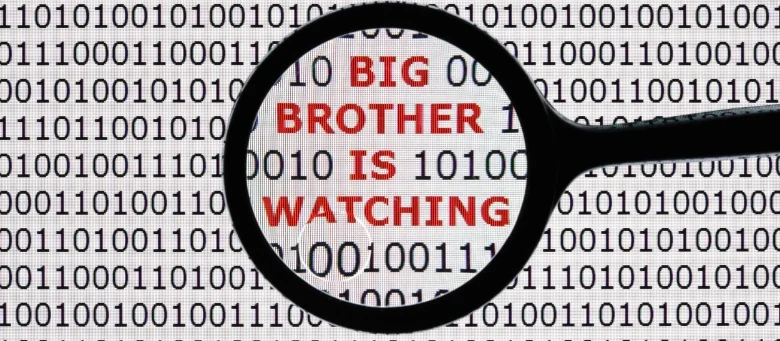
Is Big Brother Watching your 1031 Exchange?

big brother is watching your 1031 exchange

One of our clients recently asked the following question: "Can the Minnesota Department of Revenue force your Qualified Intermediary provide them with your private information relating to your 1031 exchange?" This is a common question among taxpayers who are considering a 1031 exchange. Read on to find out whether big brother is watching your 1031 exchange.

Minnesota Statute 289A

In the last few years, Minn. Stat. 289A.12 was amended to include a new subsection #16, which states:

Minn. Stat. 289A.12 Subd. 16. Qualified intermediaries. The commissioner may by notice and demand require a qualified intermediary to file a return relating to transactions for which the intermediary acted to facilitate exchanges under section 1031 of the Internal Revenue Code. The return must include the name, address, and state or federal tax identification number or Social Security number of each of the parties to the exchange, information relating to the property subject to the exchange, and any other information required by the commissioner.

This means that the Minnesota Department of Revenue can require your Qualified Intermediary to provide them with all of the key details of your 1031 exchange and any other information that they want. In other words, big brother is watching your 1031 exchange.

  • Start Your 1031 Exchange: If you have questions about your private information involved in a 1031 exchange, feel free to call me at 612-643-1031.

Defer the tax. Maximize your gain.


© 2017 Copyright Jeffrey R. Peterson All Rights Reserved


State of Mind Matters & the 1031 Holding Period

This article is all about the 1031 holding period, which is not really a period but more a state of mind. When you acquire a property in a 1031 exchange, you need to have the proper intention, specifically to hold the property for either investment or for use in a trade or business.

How Long Do I Have To Hold the Property?

Many people ask the following question:

"After, I have completed a 1031 exchange, how long do I have to hold the property?"

The answer depends. If you buy the property and immediately list it for sale and try to unload the property, then it seems apparent to me that you weren’t holding the property for investment because you have immediately listed it for sale. This is more indicative of holding the property primarily for resale. Remember that property that you hold primarily for resale is viewed by the IRS as your inventory (your stock in trade). They don’t allow 1031 exchanges on your inventory. So, if you immediately unload the property, it is not necessarily that you violated a holding period, it is that you violated the intention, the (mental) holding requirement.

What are your Intentions?

As a result, it is essential to consider your intentions when you acquire a property during your 1031 exchange. Here's another hypothetical situation:

  • You purchase a property, and after you acquire it, someone comes forward with an unsolicited offer.

  • You did not have the property listed for sale - this person just came out of the woodwork and offered you a great deal of money - more than what you paid for it.

In this circumstances, it seems to me that even though you ‘held’ the property for just a short time, you had the proper intention when you acquired it. It doesn’t matter that you disposed of the property shortly after acquiring it. What does matter is that you had the proper intention.

1031 Tip: If you receive an un-solicited offer to purchase your 1031 replacement property, you could write a letter to the purchaser saying the following: “Thank you for your offer. When I acquired the property, I intended to hold it for investment purposes, but your unsolicited offer is persuasive, and maybe we can meet a mutually beneficial result. Maybe I will be persuaded it sell it to you.”

  • Start Your 1031 Exchange: If you have questions about going into a 1031 exchange with the proper intentions, feel free to call me at 612-643-1031.

Defer the tax. Maximize your gain.


© 2017 Copyright Jeffrey R. Peterson All Rights Reserved

6 Professionals you Need on your 1031 Exchange Team

When you are doing a 1031 Exchange, you do not want to cut corners on the professional advisers that you need to complete your exchange. You want to have your team assembled, and you want to have the full complement of professional services available. That way, if a problem comes up, you can get through it. Here are a few benefits of having a 1031 team assembled before you begin your exchange.

#1 Your 1031 Exchange Qualified Intermediary Acts as an Insulator

First and foremost, when you are doing a delayed 1031 Exchange, you need to have a Qualified Intermediary. The Qualified Intermediary will act as an insulator - someone who is going to hold the proceeds so that you don’t have actual or constructive receipt of the monies. In addition, the Qualified Intermediary can prepare:

  • The exchange agreement

  • The assignment agreement

  • The required written notices to the parties

They can interact and make sure that the paperwork which documents the exchange is properly set up.

#2 Your Title Company or Law Firm Acts as Settlement Agent

In addition to a Qualified Intermediary, you need to have a settlement agent. Typically, in the real estate realm, closings are conducted by either a title company or a law firm. Whichever one you have, you want to use a sophisticated operation that is familiar with commercial real estate transactions - more precisely, 1031 Exchanges. Because the learning curve can be rather steep, you don’t want to have an outfit that doesn’t do what you need. You want someone who is experienced with 1031 Exchanges, so they will set up your transaction and disburse the monies correctly.

# 3 Your Real Estate Agent is Doing More than Collecting a Big Commission

Also, if you are doing a real estate exchange, you want to have the best and the most experienced commercial real estate agent broker involved. People in the process need to be familiar and comfortable with 1031 Exchanges. Many of the things that they do behind the scenes can make the process much easier for you. For example, a real estate agent should put a cooperation clause in the listing agreement and in the purchase agreement that says that the parties understand that the taxpayer is doing an exchange and everyone agrees to cooperate with that. If you don’t have an experienced real estate agent, you may not finish all of those things that need to be done behind the scenes.

#4 Your CPA Reports the Exchange on IRS Form 8824

Having a CPA involved in the transaction can be very helpful. Many people don’t think to call their CPA until the exchange is over. However, that is tough on the CPA because then they have to forensically figure out what was done, and dissect the transaction in the rear view mirror.

Rather than do that, you will want to involve the CPA early in a consultation, and then keep them posted as you progress through the process. That way, when it comes time to report the exchange, they are familiar with the transaction. They will know the date on which you identified your replacement property because you communicated with them throughout the process. Therefore, your CPA will be able to report the transaction correctly.  Also, if needed your CPA can file an extension of your federal tax deadline, to allow you to maximize all of your 180 days in your exchange period (a problem that can occur if you start your exchange late in the year and have to file on April 15th of the next year).

#5 Your Tax Attorney Is On Call To Give You Advice And Legal Opinions

Another critical person to have on your team, or at least on your bench, is a tax attorney. A tax attorney can do the research, and more importantly, give you an opinion on questions that you might have during the 1031 process. Some of the questions might be as follows:

  • Can we do this exchange?

  • Is this appropriate?

  • What are the parameters?

  • Where is the gray line turning into black?

  • Is this a related party transaction?

  • Will this property qualified as business or investment property?

  • How do we extract a partner out before closing?

The tax attorney is a critical player, and many people overlook this because they think that this is so cut and dried. However, as with most things in life, and especially in the area of tax law, not everything is cut and dried. Therefore, you need a tax attorney on your team from the outset.

#6 Your Financial Planner Makes Sure Your Assets Match Your Goals

The last person that you want to have on your team, and the person that you don’t often think about, is a financial planner. This person will be an adviser who can make certain that the properties that you are purchasing as a replacement are appropriate for your overall portfolio of investments. If you are 99% in real estate and don’t have any exposures to stocks, bonds, gold or other investments, perhaps you need to rethink this and do a partial 1031 Exchange. Or, you might find a way to finance your real estate holdings to expand and diversify into other areas. So, a financial planner can be a critical part of making certain that the replacement properties that you buy are appropriate with your overall goals, your adversity to risk, and the length of time that you think you will hold these properties.

  • Start Your Exchange: If you have questions about how these professionals can help you through your 1031 exchange, feel free to call me at 612-643-1031.

Defer the tax. Maximize your gain.


© 2017 Copyright Jeffrey R. Peterson All Rights Reserved