
1031 Case Study: Exchanging a Personal Residence

Personal Residence Exclusion Property

Recently, a client came to us with the following 1031 scenario. The client was looking to sell their personal current residence and 1031 into something different. They had only lived in the residence for 15 months and didn't plan to live in the replacement property. Is it possible to exchange this property in a 1031 transaction. If so, what are the implications?

Personal Residence Exclusion

Unfortunately, this situation does not qualify for 1031 exchange treatment. A personal residence may not qualify for section 1031 as it has not been used for investment for business purposes. However, there is another tax code section (section 121) that allows for an exclusion of up to $500,000 of gain if you're married or $250,000 if you’re single. That being said, you must have owned and use the property as your primary residence for at least two years.

Partial 121 Exclusion

Interestingly, there are certain exceptions that will permit a partial 121 exclusion in instances where the taxpayer moves for reasons that are beyond their control such as their employer transfers them to a different town.

Things can get very tricky when it comes to section 1031, 121 and the personal residence exclusion. It’s always best to speak with a tax 1031 tax professional about your situation to cover all of your bases.

  • Start Your Exchange: If you have questions about section 121 and the personal residence exclusion, feel free to call me at 612-643-1031.

Defer the tax. Maximize your gain.

© 2017 Copyright Jeffrey R. Peterson All Rights Reserved

How to Offset Depreciation Recapture in a 1031 Exchange

1031 Exchange Recaptured Depreciation

If someone wanted to do a 1031 exchange strictly to offset depreciation recapture, is that allowed? That's our topic for this 1031 education article.

Depreciation Recapture Example

In this example - the person would be selling a property for $250,000 and basically have no excess cash once existing mortgages were paid off.

If the taxpayer did the 1031 exchange and identified/purchased properties of at least $250K or greater within the allowed time (and put $250K or more of mortgages on them) the taxpayer would just be able to carry forward his basis without any tax consequence? The qualified intermediary would sign the huds, but wouldn't really hold or transfer any cash in this scenario. Would this work?

Using 1031 to Recapture Depreciation

The short answer is yes. 1031 works for both gain from appreciation and also deprecation recapture.

The amount of debt they have is not necessarily related to the basis that they have for tax purposes, so even if they have little or no cash proceeds at closing, they may still have a big gain...and need to do a 1031 exchange.

  • Start Your 1031 Exchange: If you have questions about 1031 exchange depreciation recapture, or anything regarding 1031, feel free to call me at 612-643-1031.

Defer the tax. Maximize your gain.

© 2017 Copyright Jeffrey R. Peterson All Rights Reserved
Tax Reporting Requirements When an S-Corp Does a 1031 Exchange

S-Corp Tax Reporting

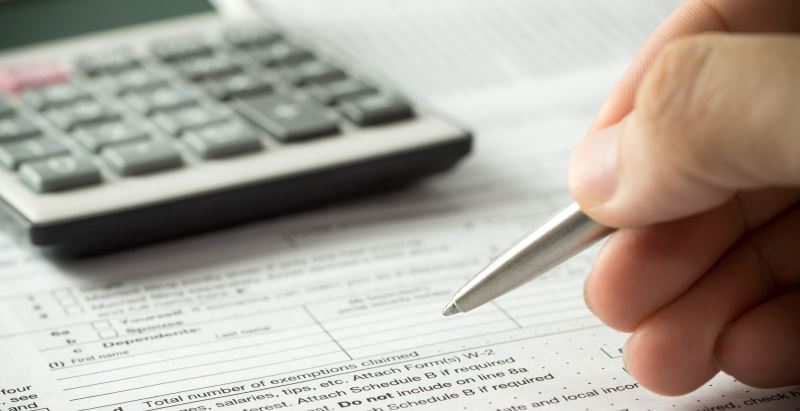
Tax day is almost here, and we're getting a lot of questions from clients about how to report property exchanges to the IRS. This article focuses on the topic of S-Corp property exchanges and IRS reporting requirements.

When an S-Corp Exchanges Property

When an S-Corp exchanges a property do the shareholders report the exchange via Form 8824 on their own 1040? If so, should each shareholder receive the relevant transaction info (acquisition/disposition dates, share of gross sales price etc., etc.) with their Schedule K-1?

Answers from the IRS

To answer questions like these, it's always best practice to go right to the IRS for answers. This link to the IRS website offers some insight to the question. Here are some relevant excerpts so you don't have to read through the entire article:

"Partners and S corporation shareholders. If you received a Schedule K-1 from a partnership or S corporation reporting the sale, exchange, or other disposition of property for which a section 179 expense deduction was previously claimed and passed through to its partners or shareholders, you must report your share of the transaction on Form 4797, 4684, 6252, or 8824 (whether or not you were a partner or shareholder at the time the section 179 deduction was claimed)."

"If the disposition was a disposition of property given up in an exchange involving like-kind property made during the partnership's or S corporation's tax year, any information you need to complete Form 8824."

"Partnerships (other than electing large partnerships) and S corporations do not report these transactions on Forms 4797, 4684, 6252, or 8824. Instead, they provide their partners and shareholders the information they need to report the transactions."

1031 exchanges can complicate your annual tax reporting, but it's important to be proactive and accurately report your exchange to ensure its success.

  • Start Your Exchange: If you have questions about 1031 exchange tax reporting requirements, or anything regarding 1031, feel free to call me at 612-643-1031.

Defer the tax. Maximize your gain.

© 2017 Copyright Jeffrey R. Peterson All Rights Reserved

1031 Holding Periods & The Qualified Purpose Requirement

What if there's a seller that has a lot for sale that they have owned for one year - can they do a 1031 exchange on the sale of that lot?

How Was the Property Held?

The answer to the question really depends on how they have held the property.

If they purchased the lot intending to use it for investment or business purposes then they can probably do the 1031 exchange because they held it for the requisite intent.

However if they bought the lot intending to flip it, holding it primarily for resale, then the IRS could make the argument that the property doesn't qualify for 1031 because it's their inventory.

The Qualified Purpose Question

The real question is has the taxpayer held the property for a qualified purpose?

The longer that you have held it for that qualified purpose the better. The IRS has never mandated or given a bright-line ruling on how long you have to hold your property prior to a 1031 exchange. Because of that ambiguity there is a lot of uncertainty as to how long one has to hold the property.

Sometimes people want to hold it for a year. Sometimes people want to cross over into the next tax year so they have at least one tax return under their belt. Other folks are very conservative and want to hold it for several years before they dispose of it in a 1031 transaction.

  • Start Your Exchange: If you have questions about qualifying purpose, the held for requirement, or anything regarding 1031, feel free to call me at 612-643-1031.

Defer the tax. Maximize your gain.

© 2017 Copyright Jeffrey R. Peterson All Rights Reserved

LLC Membership Interest & Transfer Tax in a 1031 Exchange

Transfer Tax in a 1031 Exchange

What if you own a property in a single member LLC and you’re approached by a potential purchaser who does not want to buy the land, but wants to buy your single-purpose LLC that owns the land.

Questions to Ask

The first question to ask is why does the buyer want to purchase your LLC as opposed to purchasing the land itself?

The answer may hinge on the fact that when you assign the membership interest in the LLC there's no deed recorded. Therefore, the local tax assessor may not be aware that there's even been a sale of the property.

Transfer Tax

Some questions arise as to whether or not that may violate the local states rule with regard to transfer tax.

Many states have broadened the language that applies to an instrument that transfers title to encompass both deeds, as well as other instruments that transfer the property.

So a seller may still have a statutory obligation to pay transfer tax even if they don't transfer the property by deed. By circumventing the normal closing process they may still have the obligation to pay that transfer tax.

If you're going to do this kind of transaction you may want to extract from that buyer an indemnity to protect yourself from any liability for your failure to pay the transfer tax.

Further, there are all kinds of questions about whether or not a conveyance by an assignment of the membership interest still allows you to convey the property and do a standard 1031 exchange.

Consult Your Tax Advisor

You may need to consult with your tax advisor and your attorney to make sure that your sale of the membership interest does not make it difficult for you to do a 1031 exchange.

  • Start Your Exchange: If you have questions about LLC membership interest, transfer tax, or other 1031 exchange issues, feel free to call me at 612-643-1031.

Defer the tax. Maximize your gain.

© 2017 Copyright Jeffrey R. Peterson All Rights Reserved