
Reporting a 1031 Exchange with Form 8824

Filing form 8824

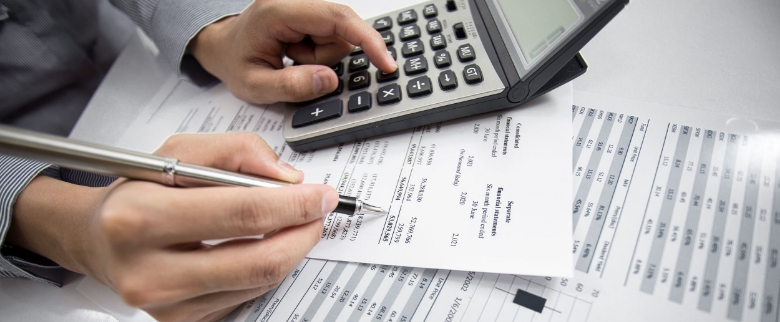
Form 8824 is a little worksheet that you attach to your tax return to report the 1031 exchange. The 8824 is sort of like the answer to the IRS’s question of "where’s my money?" Because when you sell the relinquished property, the title company, law firm, or closing agent that sells and closes that relinquished property is required to report that sale on a 1099 so the IRS is going to know that you sold your relinquished property and they’re going to be wondering where the money is.

Filing Form 8824

The form 8824 answers that question by saying we sold that relinquished property and here's the replacement property that we purchased, and it gives the IRS all the information they need to know to line up and see how the dots are connected between the sale of the relinquished property and the purchase of the new property.

Sometimes taxpayers that sell say in one year and acquire the replacement property in the subsequent year are uncertain what year they file the 8824. Is it the year from which the sale occurred or is it in the year that the purchase occurred? The answer is you need to file the 8824 for the tax return applicable to the year you sold the relinquished property. The IRS is going to receive that 1099 for the year in which you sold your relinquished property and they're going to be asking where's my money. And the answer will come from the 8824 in the year in which you sold your relinquished property.

  • Start Your 1031 Exchange: If you have questions about form 8824, feel free to call me at 612-643-1031.

Defer the tax. MAXIMIZE your gain. 

© 2016 Copyright Jeffrey R. Peterson All Rights Reserve

Non-Safe Harbor 1031 Exchanges

non-safe harbor 1031 exchange

Many people are interested in reverse 1031 exchanges but they are not interested in the 180 holding period cap. The big complaint about rev proc 2037 is that you are only allowed to park a property for up to 180 days, and you can't do much in 180 days. This is especially true if you're doing a construction reverse exchange where you want to construct an enormous amount of improvements. Here are some important things to remember about non-safe harbor 1031 exchanges.

Rev Proc 2037

It's important to note that the IRS does not necessarily say that non-safe harbor exchanges are bad, or make any judgments about them, they just say “if you want to be inside of the safe harbor, stay within the four corners of this revenue procedures.”

Why would you ever want to go outside of the safe harbor? The primary reason is if you need to park a property for longer than 180 days.

  • Start Your 1031 Exchange: If you have questions about Non-Safe Harbor Exchanges, feel free to call me at 612-643-1031.

Defer the tax. Maximize your gain.


© 2016 Copyright Jeffrey R. Peterson All Rights Reserved

The Benefits of a Build-to-Suit 1031 Exchange

Sometimes taxpayers will sell their relinquished property and want to buy a new replacement property that is built specifically to their specifications. This article will focus on the rules and regulations that govern build-to-suit 1031 exchanges.

General Build-to-Suit Rules

The general rule for build-to-suit exchanges is that you can’t construct improvements on land that the taxpayer already owns. The IRS takes the position that any improvements you construct on the land that you already own don't count for the 1031.

So in order to do a build-to-suit construction exchange, the taxpayer sells their old relinquished property and the money comes to the intermediary and is held in an escrow account. Then the intermediary forms an LLC to be the straw man purchaser that acquires title to the new property and holds title to it while the improvements or remodeling is completed.

The Benefits

The idea is that the taxpayer gets two awesome benefits:

  1. They get a property built to their specific needs and specifications.

  2. They get to defer the gains built into this property built to their specific needs.

Take this example: you sell a relinquished property for a million dollars, buy a piece of raw land for five hundred thousand, and then you make construction improvements of five hundred thousand dollars or more during the 180 day exchange period, then you get to defer every penny of tax. You have acquired or received a replacement property of equal or greater value than what you relinquished. And the beauty of a build-to-suit is you get to construct those improvements to get the requisite value up and you get to construct them to your specific values and needs.

  • Start Your Exchange: If you have questions about build to suit 1031 exchanges in Minneapolis, feel free to call me at 612-643-1031.

Defer the tax. Maximize your gain.


© 2016 Copyright Jeffrey R. Peterson All Rights Reserved

What is a Delaware Statutory Trust?

delaware statutory trust

A Delaware Statutory Trust (DST) is a new-fangled creature. Years ago, LLCs were the new kids on the block and not every state had an LLC statute. DSTs are kind of like the newest kids on the block. Here is a primer on Delaware Statutory Trusts as they relate to 1031 exchanges.

The Basics of a Delaware Statutory Trust

A Delaware Statutory Trust is a method of owning property where at the top of the ownership pyramid there is a trustee that is the figurehead owner of the property. That trustee can enter into institutional financing with creditors, and can enter into leases with occupants of the property. But for tax purposes the beneficial owners of the trust, the investors that put their money into the purchase of the DST, are not deemed to be owners of a trust, but instead are deemed to be owners of the assets (typically real property) of the trust.

DSTs and 1031 Exchanges

For 1031 exchange purposes you can sell a traditional fee interest in title and acquire a beneficial interest in a Delaware Statutory Trust and that interest will be treated as interest in the underlying real estate and as like-kind to the fee simple title sold in the relinquished property.

Some of the benefits of a Delaware Statutory Trust are that they may be designed to provide a steady income stream for the investors, typically the debt on a DST is institutional and non-recourse financing. So if a taxpayer has to acquire a property with debt on it, to satisfy any requirements under the napkin test for debt relief, at least they are taking-on non-recourse debt instead of debt for which they are personally liable for.

  • Start Your 1031 Exchange: If you have questions about Delaware Statutory Trusts, feel free to call me at 612-643-1031.

Defer the tax. Maximize your gain.


© 2016 Copyright Jeffrey R. Peterson All Rights Reserved

The History of 1031 Exchanges

Many people have questions about the history of section 1031. In this article we will talk about the origins of 1031 exchanges – how they came to be and what they look like today.

A 1031 History Lesson

Going back to 1921, there have been provisions in the Internal Revenue Code that have allowed for the tax-fee swapping for exchanges in property. These iterations of Section 1031 have survived the overhauls of the Internal Revenue Code of 1939, 1954, and the most recent comprehensive revision in Tax Reform Act of 1986.

The big development in the 1031 world came from the Starker decision wherein a non­simultaneous exchange occurred - see Starker v.United States, 602 F.2d 1341 (9th Cir. 1979). This was the first deferred exchange where a taxpayer sold a relinquished property and didn’t instantaneously receive the new replacement property, but instead received the replacement property subsequent to the disposition of the old property. Essentially, this was the first “deferred” or “delayed” exchange where the replacement property came in later.

The Benefits of a Deferred Exchange

The benefits of a deferred 1031 exchange are that you don't necessarily have to line up the stars so that you can sell the relinquished property and instantaneously receive your replacement property. Instead, under the current Treasury Regulations you can sell the relinquished property on day 1 and receive your replacement property up to 180 days thereafter.

Additionally, you don't have to contract directly with the same party to receive your replacement property. You can sell your relinquished property to party A, and receive your replacement property from somebody completely different, party B. The benefits of a deferred exchange are that you have much more flexibility in time and in the relationships with the parties to structure a clean sale of your relinquished property to a third party purchaser and structure a clean purchase from someone completely different up to 180 days after you sold your old property. This gives you much more flexibility to get deals done and to defer the taxes.

The modern Treasury Regulations also require you to designate or identify your new replacement properties in writing within 45 days after the closing of the sale of your old relinquished property. For more information on identification rules see our Primer on 1031 Identification Rules.

  • Start Your Exchange: If you have questions about the history of 1031 exchanges, feel free to call me at 612-643-1031.

Defer the tax. Maximize your gain.

© 2016 Copyright Jeffrey R. Peterson All Rights Reserved